The Orchestrator's Manifesto: Surviving the Era of AI-Driven Development
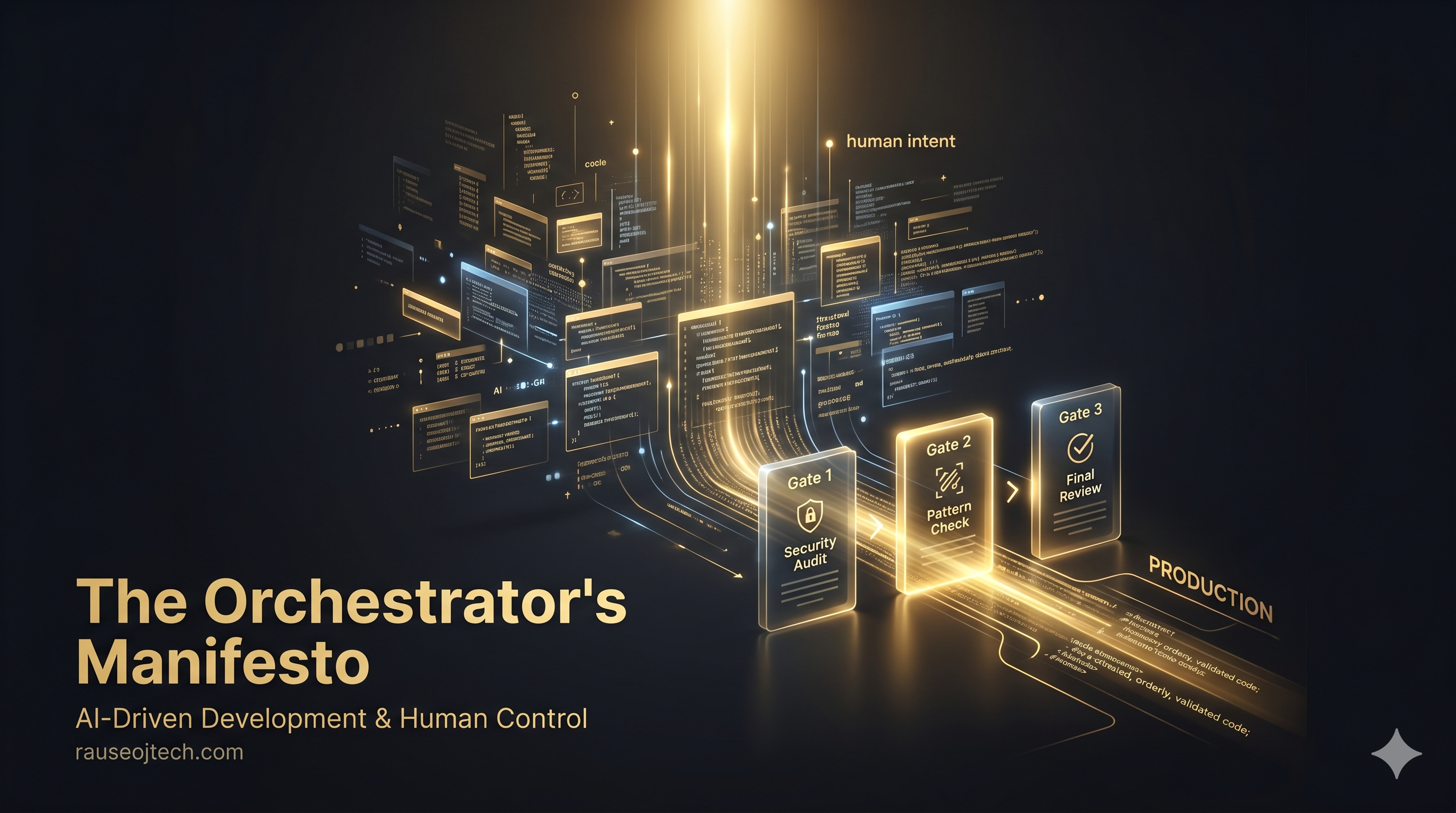
Software engineering is undergoing its most significant paradigm shift in decades. For years, the barrier to entry was the mastery of syntax—the "mechanics" of programming. Today, that barrier is dissolving, replaced by a new requirement: the ability to architect, manage, and verify.
The Death of the "Coder," The Birth of the "Conductor"
When I work on my home lab, I no longer spend hours wrestling with syntax errors. Instead, I am orchestrating. I am defining the rules, setting the boundaries, and assigning tasks to agents.
"Vibe Coding" is more than just rapid prototyping; it is directing. The core challenge isn't writing the code—it’s knowing the system architecture well enough to tell the agent what to build and how to build it safely.
The Inventory Software Lesson: A Case Study in "Back-End Bloat"
My recent attempt to build an inventory management system provided a harsh lesson. I was able to generate robust back-end logic quickly, but I ended up with a system I couldn't fully evaluate because I didn't know the intricacies of the Python implementation.
This is the central tension of our time:
- The Pro: Velocity is through the roof. I built the back-end in a fraction of the time.
- The Con: If you don't understand the underlying implementation, you create "black boxes." When something breaks, you are left staring at code you didn't write and cannot debug.
Formalizing the Process: Lessons Learned
I’ve learned that the secret to clean, maintainable code isn't better AI models—it’s better constraints. By formalizing rules and processes, I’ve moved from reactive debugging to proactive design:
- The .projectplan Protocol: By requiring the agent to generate an IMPLEMENTATION_PLAN.md and a TASK_LIST.md inside a .projectplan folder, I force the AI to "think before it acts." This exposes architectural flaws before the actual coding begins.
- Establishing Patterns: I now require the agent to explain the proposed coding pattern to me for sign-off before it begins writing.
Security as a Primary Requirement
In the past, security felt like an afterthought. In an agent-driven world, it must be part of the initial prompt.
- Proactive Investigation: Before starting a project, I now allocate time to investigate the most recent security threats associated with my stack. By feeding these "threat vectors" into the project rules, I instruct the agent to avoid those specific pitfalls.
- The "Zero-Trust" Agent Workflow: My agents have limited access. My rule is simple: The agent should never have more access than it needs.
- Verification is the New Coding: My .changesreview process is not just about keeping track of history; it is my primary security audit. I review the changes to ensure that the code adheres to the security standards I established at the start.
The New Checklist for the Modern Developer
The AI can suggest the "how," but the human must define the "why." As developers, our value no longer lies in being a human compiler; it lies in being a Gatekeeper:
- Define Intent: Always set your security rules and architectural patterns before the agent starts.
- Audit, Don't Trust: Just because it "works" doesn't mean it's secure. If you can't read the code, don't ship it.
- Continuous Review: Use a daily changes review to ensure the project hasn't drifted from your original vision.
The future of programming isn't about writing fewer lines of code—it's about taking full responsibility for every line that is written.

Discussion
No comments yet. Be the first to share your thoughts!
You must be logged in to leave a comment.
Sign In